For East Lansing residents, Grand River Avenue is the place to turn to for almost anything, from bookstores to restaurants to college bars. Its sidewalks are almost always bustling with students walking to class, business men and women meeting for lunch, and enthusiastic Spartans heading to football games. However, Grand River Avenue hasn’t always been the hotspot for college students and East Lansing residents. It hasn’t always been the well-traveled, paved road that we know it as now. In fact, Grand River’s history begins even before MSU’s does.
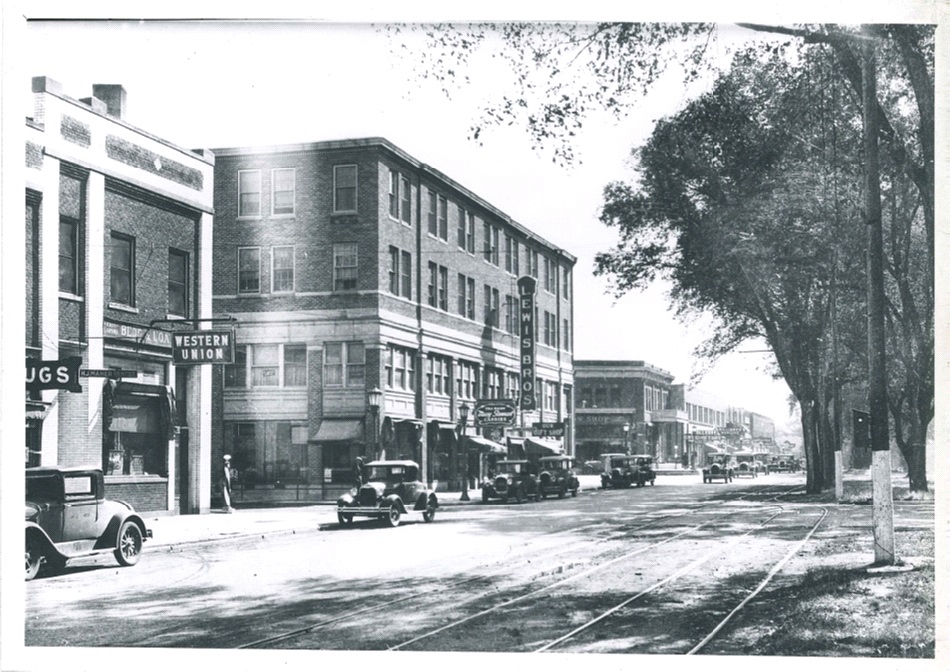
Grand River Road (the name wasn’t changed to Avenue until later on) wasn’t established until 1840; prior to this year, no record of any established roads in the area had been preserved. As it was for many early roads of the state, Grand River followed the trail that the Native Americans had made along the north bank of the Cedar River. The road stretched from Detroit to Portland (though now it stretches to Grand Rapids), and it was known as the primary overland stage-and-wagon-freight route through central Michigan until the railroad was built.
In 1852, the Lansing Central Plank Road Company built a plank road over the Lansing and Howell Road (the section of Grand River Road that ran between Howell and Lansing) and tollgates were distributed along the road every four to six miles. The plank road was completed in 1853 and was built of oak planks three inches tall and fourteen feet long. They were laid crosswise across heavy oak stringers to make a flat and hard road surface. Due to constant weathering and decay however, travelers often filled gaps in the road with gravel and mud. Eventually, the planks were completely removed, the road was paved with a gravel surface, and a streetcar was installed.
With the ever-increasing student population of MAC during the early 1900s came the development of shops and stores along the campus stretch of Grand River. The college drug store and the college café were built at the intersection of Grand River, and the Delta Apex, (where Michigan meets Grand River) became a popular place for gas stations as well as the location of the First East Lansing State Bank (established in 1916).
Because this section of Grand River was becoming busier and more popular, it was decided that the old streetcar was inadequate, and the new Interurban line was installed. It wasn’t long before East Lansing changed its major choice of transportation again, and in the 1930s the bus line took the interurban’s place. Parking along the avenue was officially banned in the 1950s
So why are we, the CAP team, interested in the history of this Grand River Avenue? Because (once again) the city of East Lansing intends to start construction on Grand River in the next couple of years, with plans to make room for a new bus route. We want to make sure that we have fully researched the history of the road so that we can anticipate any potential archaeological finds that might surface once the construction begins. We are not the official archaeological team in charge of this project, but we have written up a report to forward on to help with the process.

During construction of the road in 1995, approximately 20 logs were uncovered at the Bailey street entrance of Grand River. These logs were, in fact, part of the original plank road that was used back in the 1800s. There is potential to find more of these planks during the new construction. However, because it appears that the center of the original plank road was likely within the northernmost part of the current road, it doesn’t seem probable. Due to the current construction plans primarily focusing on the excavation/removal of the current median, it is unlikely that this work will intersect with any of the former plank/corduroy road sections.
However, that doesn’t mean that the teams involved won’t be keeping an eye out for anything with archaeological significance. The National Historic Preservation Act (NHPA) was created with the intent to preserve all historical and archaeological sites in the United States, and it’s important that here in East Lansing we do just that. Should anyone involved with this project find anything significant, the necessary precautions will be taken to preserve the discoveries.
Author: Bethany
Sources:
Towner, J.D. (1933) History of the City of East Lansing.
Miller, W. (2002) East Lansing: Collegeville Revisited. Arcadia Publishing
Dunham, Sean B., John M. Gram and Mark C Branster. 1997. M-43/Grand River Avenue, East Lansing, Michigan: The Lansing and Howell Plank Road, A Data Recovery Effort. 96-07. Great Lakes Research Associates, Inc.


Leave a Reply